Blog
Research, workflows, prompts, comparisons, and production tests for MiniMax H3.
Local Deployment guides
Explore the local MiniMax H3 ecosystem across ComfyUI, Hugging Face files, VRAM planning, GGUF experiments, LoRA status, quantization, and open-weight deployment. Each guide separates verified support from community experimentation.
These articles help you estimate hardware requirements, check model files safely, and decide whether a local workflow or the online workspace better fits your production needs.
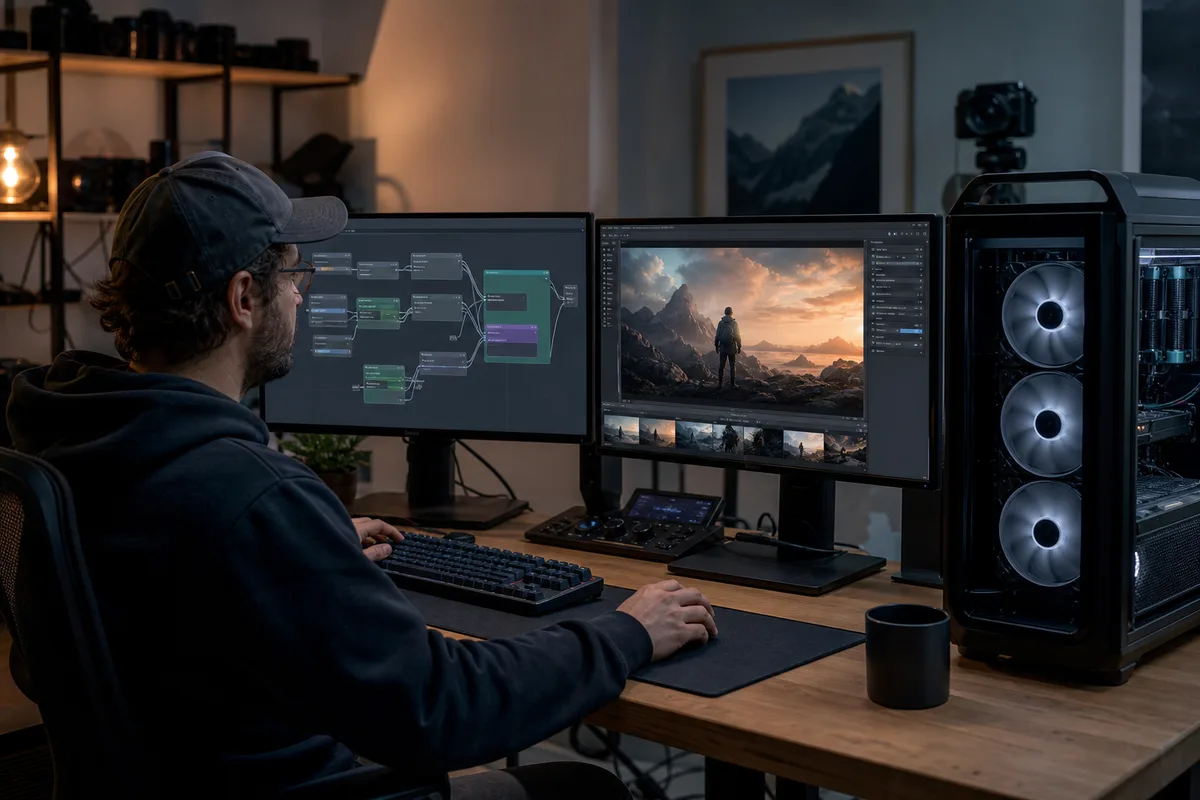
MiniMax H3 ComfyUI Guide: Setup and Local Workflow
Learn how a MiniMax H3 ComfyUI workflow is structured, what local setup requires, and when an online H3 generator is the more practical choice.

MiniMax H3 GGUF Guide: Quantization, Compatibility, and Safety
Learn what a MiniMax H3 GGUF conversion can and cannot do, how quantization affects VRAM and quality, and how to verify community files safely.

MiniMax H3 on Hugging Face: Files, Model Card, License, and Setup
A practical guide to the official MiniMax H3 Hugging Face page, including model files, revisions, licensing, downloads, and local workflow checks.

MiniMax H3 LoRA Guide: Fine-Tuning Status, Uses, and Alternatives
Explore the MiniMax H3 LoRA landscape, what training support requires, how to evaluate adapters, and practical alternatives for consistent characters and styles.

Is MiniMax H3 Open Source? Weights and License Explained
Understand what is open about MiniMax H3, what open-weight means, how local deployment differs from the hosted API, and what to verify before commercial use.

MiniMax H3 VRAM Requirements: A Practical Local Hardware Guide
Understand MiniMax H3 VRAM, system RAM, storage, speed, quantization, and realistic local workflows from entry GPUs to the RTX 5090.